Outdoor LED components face rain, condensation, dust, sunlight, and sudden temperature changes. These conditions can damage circuit boards, corrode connectors, and shorten product life. Waterproof protection is not merely a marketing feature. It supports stable lighting, safer maintenance, and more predictable performance in demanding environments.
In real installations, small details often decide the outcome. A sealed housing may still fail when a cable gland is loose. Water can also collect beneath a mounting bracket or enter through an unprotected connector. That is why installers should understand How to waterproof outdoor LED components before installation begins. Product selection matters, but so do drainage paths, silicone seals, cable routing, and correctly tightened fittings. IP ratings provide useful guidance, yet they do not replace practical testing. An IP65 product may resist water jets, but it may not suit permanent immersion or heavy condensation. Check the manufacturer’s specifications carefully.
Reliable designs usually combine UV-resistant materials, corrosion-resistant hardware, sealed connectors, and suitable thermal management. Moisture protection must not trap excessive heat inside the enclosure. This balance is easy to overlook. In field work, I have seen well-sealed fixtures fail because heat had nowhere to escape. Testing under rain, spray, vibration, and temperature cycling can reveal weaknesses before deployment. No enclosure remains perfect forever. Seals age, cables move, and installation conditions change. Regular inspection is therefore part of waterproof performance, not an optional extra. Good engineering accepts that reality and plans for it.
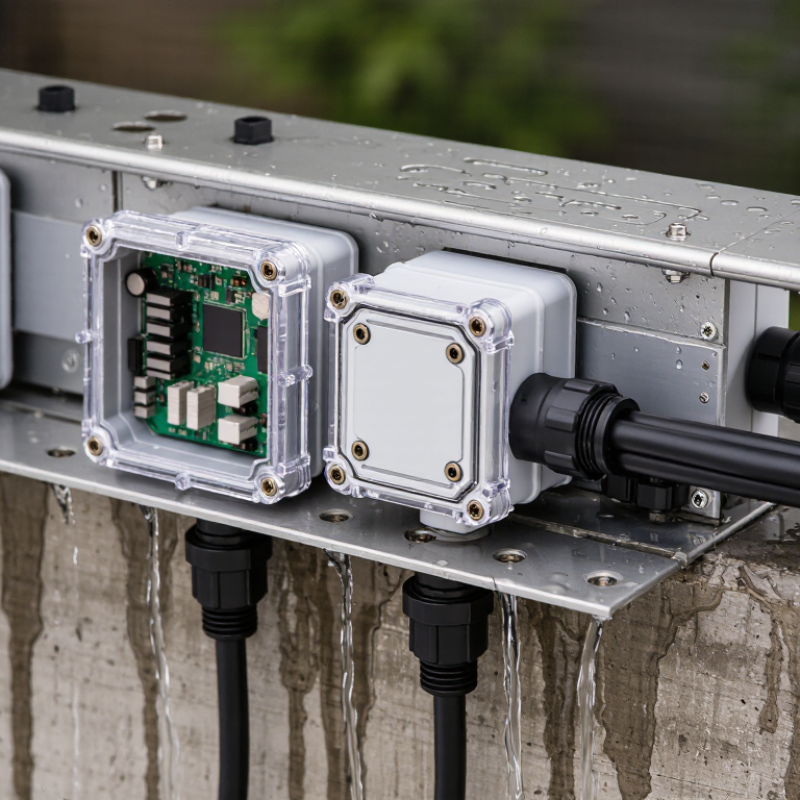
Outdoor LED components face rain, dust, humidity, and sudden temperature changes. Waterproofing helps control how these conditions enter a housing, connector, or cable joint. It does not mean the component can survive every environment without care.
In practical terms, waterproofing usually involves sealed enclosures, tight gaskets, protected cable glands, and drainage paths. The IP rating, defined under IEC 60529, indicates resistance to dust and water entry. A higher rating offers stronger protection, but installation still matters. A poorly tightened gland can defeat a well-designed enclosure. Small gaps matter.
Condensation is often overlooked. Warm air inside a component may cool at night, leaving moisture on internal surfaces. I have seen corrosion begin around terminals after repeated wet and dry cycles. UV exposure can also harden seals, while freezing water may widen tiny cracks. These failures are slow and easy to miss. That is the problem.
Reliable outdoor LED designs match the protection level to the actual location. A covered walkway may need less protection than a ground-level sign exposed to driving rain. Technicians should inspect seals, cable entries, and mounting angles during maintenance. They should also check whether water can drain instead of pooling near connections. Waterproofing is not a single feature. It is a chain, and one weak link can interrupt the light.
Outdoor LED components face rain, fog, condensation, and irrigation spray. Moisture travels. It can enter through cable joints, lens edges, or damaged seals. Once inside, water creates conductive paths across circuit boards. This may cause flickering, dim output, or sudden failure. I have seen fixtures work normally at dusk, then fail after a cold, wet night. The problem was not always heavy rain. Condensation inside a warm housing caused corrosion around connector pins.
A sealed enclosure helps, but “waterproof” should not be treated as permanent protection. An appropriate IP rating indicates tested resistance to dust and water under defined conditions. It does not guarantee survival after impact, ultraviolet aging, poor installation, or repeated temperature cycles. Moisture can also weaken thermal performance. Wet contaminants form a film that traps dirt, while corrosion increases electrical resistance and heat. LEDs dislike heat. Long exposure can reduce brightness and shorten driver life.
Reliable installation starts with correctly tightened glands, downward cable loops, and compatible gaskets. Drain paths must remain open. Inspect cloudy lenses, cracked seals, loose connectors, and water marks after severe weather. Drying a fixture may restore light temporarily, but it does not remove hidden corrosion. This is where field judgment matters. I sometimes replace a questionable seal earlier than planned; that costs less than repeated callouts. Still, testing only one sample can create false confidence. Humidity, salt air, and installation orientation vary widely.
Outdoor LED components face rain, dust, insects, washing water, and sudden temperature changes. Waterproof ratings show how well an enclosure resists these threats. The IP code contains two numbers. The first measures protection against solid particles. The second measures protection against water. Higher numbers usually indicate stronger resistance, but the rating must match the installation environment.
IP65 protects against dust and water jets. It suits covered walkways, building façades, and signs exposed to ordinary rain. IP66 offers stronger resistance to powerful water jets, which helps near open structures or cleaning areas. IP67 allows temporary immersion, usually up to one meter under specified test conditions. IP68 supports deeper or longer immersion, but the manufacturer must define the exact limits. These ratings are not interchangeable.
I learned this through outdoor installations. An IP67 light still failed when its cable entry remained poorly sealed. The housing passed testing, but the complete system did not. Small gaps matter. Use compatible glands, sealed connectors, and downward-facing cable loops. Check drainage points too. Trapped condensation can damage boards even without visible leaks. Coastal sites need extra attention because salt accelerates corrosion. UV exposure also weakens some seals over time. An IP rating describes tested resistance, not permanent immunity. That distinction is easy to miss. Inspect gaskets after seasonal temperature changes, and never assume a higher number solves every installation problem.
Outdoor LED components face rain, dust, sunlight, salt, and repeated temperature changes. Weather resistance begins with material selection, not the housing label alone.
UV-stabilized polycarbonate can resist cracking, while anodized aluminum helps control heat and corrosion. Stainless steel fasteners reduce rust around mounting points. Small details matter. A poorly chosen gasket may flatten after years of compression and allow moisture inside.
In coastal sites, even strong metal can corrode where coatings are scratched. I have seen water collect beneath a lens because the fixture had no drainage path. The failure appeared as dimming and intermittent flicker.
Design features should manage water before it reaches sensitive electronics. Silicone or EPDM gaskets need even pressure around the full seam. Cable glands should grip the cable jacket and prevent capillary seepage.
Downward-facing connectors shed rain more effectively than upward-facing joints. Conformal coatings and resin potting add another barrier, but they can complicate repair and trap heat.
Thermal paths deserve equal attention. LEDs lose efficiency when heat cannot move through the board and housing. A sealed enclosure still needs a tested heat route.
Look for documented ingress testing, UV exposure data, corrosion checks, and operating-temperature limits. An IP rating describes tested protection, not permanent immunity.
Installation quality changes the result. Over-tightened screws can damage seals, while loose covers invite condensation. Drain holes may prevent pressure-driven moisture buildup, but they also need inspection.
My own weak point is maintenance planning; durable materials are easy to specify, while gasket replacement is easy to forget. A six-month inspection can reveal chalking, loose glands, blocked drains, or early corrosion before failures become visible at night.
Choosing waterproof LED components for outdoor settings requires more than selecting a high IP rating. A garden path needs sealed housings, UV-resistant lenses, and connectors that tolerate wet soil. For covered patios, splash protection may be enough, but exposed fixtures face rain, dust, and temperature changes. An IP65 component resists water jets, while IP67 also handles temporary immersion. The rating must match the actual location.
Near the coast, salt spray can corrode ordinary terminals within months. Use marine-grade fasteners, gasketed connectors, and protected cable entries. Roof lighting needs components that survive heat under dark surfaces. Good thermal management matters because excessive heat shortens LED life. In snowy areas, check whether the housing can withstand freezing and repeated thawing. Small details matter.
Poolside lighting needs extra attention. Moisture can travel through poorly sealed cables, even when the lamp looks intact. Follow local electrical rules and use qualified installers for low-voltage systems. Test seals before installation. Do not trust appearance alone.
I have learned that “waterproof” is rarely absolute. A component may pass a laboratory test yet fail after careless installation. Drainage, cable bends, and damaged gaskets can change performance quickly. Higher protection is not always better if heat cannot escape. The best choice balances water resistance, temperature control, maintenance access, and the setting’s real weather conditions.
Choosing Waterproof LED Components for Different Outdoor Settings
The chart compares the water-protection level indicated by the second digit of selected IP ratings under IEC 60529. Higher ratings provide stronger protection against rain, water jets, and temporary immersion, helping outdoor LED components maintain safer and more reliable operation in demanding environments.
Water can enter through cable joints, lens edges, or damaged seals. It creates conductive paths across circuit boards. Flickering, dimming, or sudden failure may follow. Sometimes, condensation causes more damage than rain.
Yes. A warm housing may collect condensation as temperatures fall. Connector pins can corrode inside the enclosure. The fixture may work at dusk, then fail overnight. This failure is easy to underestimate.
No. An IP rating reflects tested resistance under specific conditions. It does not cover impact, aging seals, or poor installation. Repeated temperature changes can still create moisture problems. “Waterproof” is not permanent immunity.
IP65 resists dust and water jets. IP66 handles stronger water jets. IP67 allows temporary immersion under defined conditions. IP68 permits deeper or longer immersion, with limits set by the manufacturer.
Yes. Poorly sealed cable entries can defeat a well-tested housing. Loose glands, damaged gaskets, and upward-facing connectors invite water. The complete installation matters more than one test result. Small gaps matter.
Tighten cable glands correctly. Use compatible gaskets and sealed connectors. Create downward-facing cable loops. Keep drainage paths open. Over-tightening can damage seals, so more pressure is not always better.
UV-stabilized polycarbonate can resist cracking. Anodized aluminum supports heat control and corrosion resistance. Stainless steel fasteners reduce rust at mounting points. Even durable materials fail when drainage and gasket pressure are poor.
Wet dirt can form a film that traps heat. Corrosion increases electrical resistance and temperature. Poor thermal paths reduce LED efficiency and driver life. A sealed enclosure still needs an effective heat route.
Inspect them after severe weather and seasonal temperature changes. A six-month schedule can reveal loose glands, blocked drains, and cloudy lenses. Check for water marks and early corrosion. Drying a fixture may restore light temporarily, but hidden corrosion remains.
Salt air accelerates corrosion around scratches and connectors. UV exposure can weaken seals over time. Coastal fixtures need closer inspection and better material choices. I sometimes replace a questionable seal early, although maintenance planning remains imperfect.
Waterproof outdoor LED components are essential for reliable lighting in environments exposed to rain, humidity, dust, and temperature changes. Waterproofing helps prevent moisture from entering housings, connectors, and circuit areas, reducing corrosion, short circuits, flickering, and premature failure. Understanding how to waterproof outdoor LED components involves selecting sealed enclosures, protected cable connections, drainage or ventilation solutions, and durable materials that can withstand continuous weather exposure without trapping condensation.
Waterproof ratings, such as IP classifications, help match LED components to specific outdoor conditions, from sheltered areas to locations exposed to heavy rain or water jets. Materials including corrosion-resistant metals, weather-stable plastics, protective coatings, and high-quality gaskets can further improve durability. The best choice depends on the installation setting, expected moisture level, temperature range, maintenance access, and required service life. By combining an appropriate protection rating with thoughtful design and correct installation, outdoor LED systems can deliver safer, steadier, and longer-lasting performance.

Zever Light