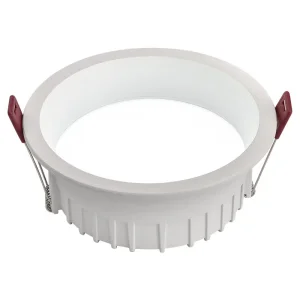
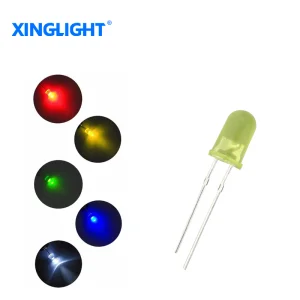
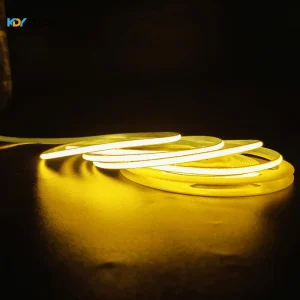
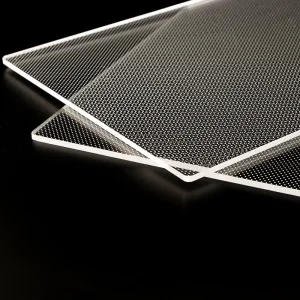
Explore our foundational lines of solid-state status indicators, customized high-power COB modules, and precision healthcare optical components engineered for severe operating environments.
Analyzing the shift toward micro-miniaturized architectures, extreme-duty ingress protection, and state-of-the-art solid-state status feedback systems.
In modern industrial design, Human-Machine Interface (HMI) configurations require unparalleled clarity to ensure functional safety, operating efficiency, and instant fault detection. The market is transitioning rapidly from standard single-color warning lamps to multi-state, high-reliability bi-color LED indicators. By packaging two different light-emitting chips—traditionally Red and Green, or Amber and Green—within a single compact housing, design engineers can convey multiple distinct operating profiles (such as Off, Running, Safe, and Alarm) from a single mounting aperture. This not only minimizes enclosure footprint requirements but drastically reduces hardware installation and wiring complexity.
Recent optoelectronic developments emphasize micro-miniaturization, leading to the rise of specialized dual-color SMD configurations and panel-mount indicators with ultra-thin profiles. Additionally, the proliferation of Internet of Things (IoT) hardware has spurred demand for indicators capable of handling dynamic pulsing, variable duty cycles, and highly specific spectrum outputs. Modern automated systems also require optical components to operate consistently in hazardous environments, pushing leading manufacturers to engineer solutions featuring IP67, IP69K, and IK10 impact ratings to guarantee resilience against dust, liquid ingress, chemical sanitization, and mechanical abuse.
Sealed assemblies featuring IP67/IP69K ratings resist extreme washdowns, high-pressure steam cleaning, and chemical sanitizers commonly found in food processing, marine, and oil & gas facilities.
Integrating high-efficiency AlGaAs (Red) and InGaN (Green/Blue) dies in standard 3-pin or 2-pin bi-polar architectures delivers crisp, non-overlapping color boundaries and exceptional contrast.
Utilizing strict MacAdam Ellipse binning (within 3 steps) guarantees uniform chromaticity, matching luminosity levels across production runs to avoid color mismatch in wide-scale control arrays.
Addressing supply chain risks, regulatory compliance, quality control frameworks, and total-cost-of-ownership optimizations.
For international supply chain managers and electronic engineering procurement specialists, choosing a reliable partner for bi-color LED indicators goes far beyond simple per-unit cost calculations. Industrial applications require highly predictable lifespans (typically MTBF exceeding 100,000 continuous hours) and consistent electrical characteristics across massive batches. Major sourcing challenges include lead-time volatility, component performance degradation under high ambient heat, and failure to comply with environmental regulations such as RoHS, REACH, and California Proposition 65.
To mitigate these hazards, global enterprise buyers require rigorous testing validation protocols. An ideal supplier must demonstrate verifiable traceability, utilizing optical test integration spheres and thermal cycle aging chambers to ensure every production lot maintains precise forward voltage tolerances ($V_f$) and luminous intensity levels. Sourcing from certified manufacturing ecosystems ensures compliance with standard ISO 9001 quality workflows and ISO 14001 environmental benchmarks, enabling seamless global product deployment.
| Indicator Housing Type | Material Configuration | Electrical Characteristics | Spectral Outputs | Ingress / Impact Protection |
|---|---|---|---|---|
| Panel Mount Miniature | Stainless Steel / Brass Nickel-Plated | 12V, 24V DC / AC, Integrated Ballast | Red (625nm) / Green (525nm) | IP67, IK10 Vandal-Resistant |
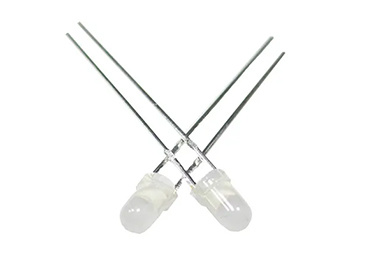
| Through-Hole Radial LED (3mm/5mm) | Optically Clear Epoxy Lens, 3-Pin Common Cathode | $I_f = 20\text{mA}$, $V_f = 2.0\text{V} - 3.2\text{V}$ | Red (630nm) / Pure Green (520nm) | Board-Level Encapsulated |
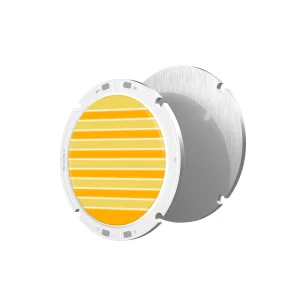
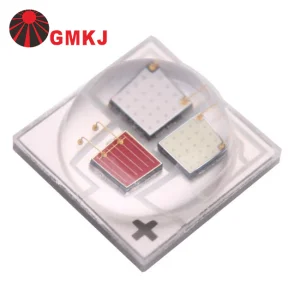
| Industrial COB Module | Copper Substrate, Highly Reflective Cavity | 100W to 200W, Constant Current | CCT Adjustable (3000K to 6500K) | Designed for Luminaire Integration |
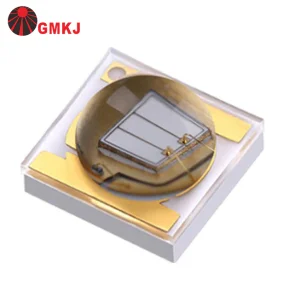
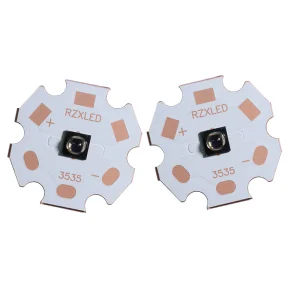
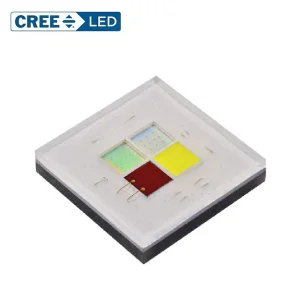
| Surface Mount Device (SMD 3535) | Alumina Ceramic Base, Gold Wire Interconnects | $I_f = 350\text{mA}$ per channel, High Power | Custom Dual/Tri Wavelengths | JEDEC MSL-3 Classification |
How automation, raw material traceability, and advanced enterprise resource planning maintain our manufacturing advantage.
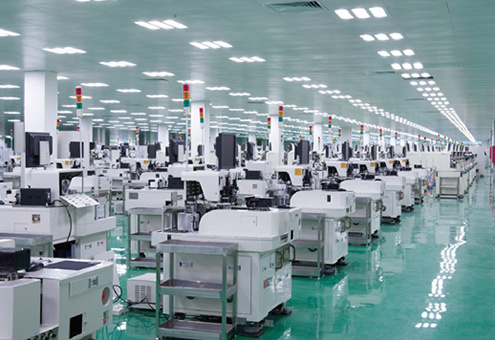
As the global electronics industry adapts to dynamic supply chains, Chinese manufacturers are evolving from standard assembly facilities into fully automated Factory 4.0 digital ecosystems. Industrial-grade LED indicators require tight structural tolerances and cleanroom packaging environments. Automated die-bonding, wire-bonding, and high-speed encapsulation lines eliminate human error, ensuring consistent component alignment and uniform epoxy distribution.
Furthermore, our regional localization within Zhongshan—China's premium lighting engineering cluster—provides an unparalleled vertical supply chain advantage. This localized network encompasses rapid PCB prototyping, precision metal machining, advanced plastics formulation, and packaging suppliers within a 50-kilometer radius. Coupled with real-time ERP integration, we can scale production rapidly while maintaining the flexibility to prototype custom indicators in days rather than months.
Pioneering Global LED Indicator Standards Since 2005
Zhongshan Zever Light Co., Ltd. is a leading manufacturer specializing in the R&D, manufacturing, and distribution of high-performance optoelectronic components. Located in Zhongshan, the heart of China’s lighting industry, we have dedicated over 18 years to perfecting our optical designs, structural sealing, and material configurations.
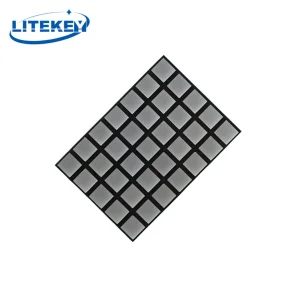
Our core product lineup features high-durability THT indicators, high-density SMD LEDs, numeric LED displays, high-power infrared emitters, ultraviolet sterilization components, and dot-matrix modules. We utilize premium raw materials, sourcing advanced LED chips, copper lead frames, and gold wire from trusted partners in Japan, South Korea, Taiwan, and the United States. This rigorous approach ensures all Zever Light components meet RoHS and REACH environmental guidelines while delivering long-term reliability.
With an experienced R&D department featuring 16 senior engineers, we specialize in providing tailored customization solutions for unique panel indicators, customized color spectra, and specialized driver configurations. By combining these capabilities with advanced ERP platforms and comprehensive QA/QC processes, Zever Light guarantees consistent quality and on-time delivery to our global client base.
Analyzing how our dual-state and specialized indicators integrate across demanding industrial fields.
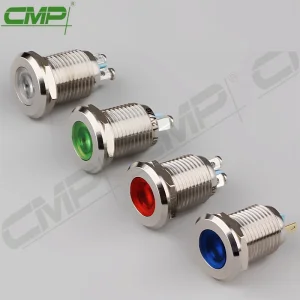
Integrating 12mm metal IP67 panel mount indicators into rugged control systems. These indicators deliver clear Red/Green visual feedback, remaining highly visible under bright shop floor illumination.
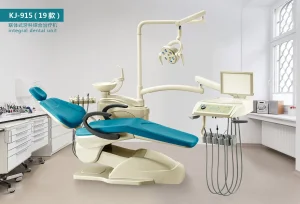
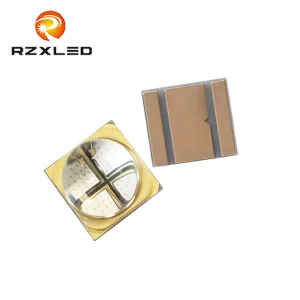
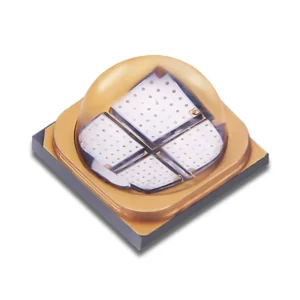
Supplying low-thermal-resistance, dual-color COB modules and high-CRI indicators for medical towers and dental light assemblies. These systems provide precise visual indication and highly accurate color rendering.
Utilizing 3535 UVA/UVC quartz-glass encapsulated LEDs (365nm to 385nm) to deliver intense germicidal UV output. These components feature integrated status feedback for automated sterilization systems.
Protecting outdoor systems against vandalism and weathering. Our stainless steel housing indicators prevent water intrusion and resist heavy impact, making them ideal for EV chargers and transit kiosks.
Addressing critical technical questions regarding the configuration, electronics, and installation of dual-color LED indicators.
Common Anode (CA) shares a single positive contact, requiring independent negative control lines to illuminate individual colors. Common Cathode (CC) shares a ground pin, requiring positive control lines for each anode. Bipolar configurations use a 2-pin layout where color output is controlled by reversing the current flow polarity, making them ideal for space-constrained wiring configurations.
Forward voltage is determined by the bandgap energy of the semiconductor material. Red LED dies (GaAsP or AlInGaP) require lower forward voltage (typically $1.8\text{V} - 2.2\text{V}$), while Green/Blue dies (InGaN) require a higher voltage (typically $3.0\text{V} - 3.4\text{V}$). To ensure balanced luminosity, driver circuits must adjust current limiting resistors accordingly.
Our IP67 indicators feature double-seal designs with precision-molded silicone O-rings, combined with internal epoxy encapsulation. The rear terminals are completely backfilled, preventing moisture from wicking into the housing even when subjected to temperature-induced pressure differentials.
Our high-power dual-color COB components utilize highly conductive mirror-surface copper substrates. This structure is combined with eutectic die bonding and gold wire interconnects to minimize thermal resistance ($R_{th,j-c} < 0.5^\circ\text{C/W}$), ensuring stable operation at elevated drive currents.
Yes, our panel indicators are fully compatible with standard PLC sourcing or sinking outputs ($24\text{V DC}$). Integrated current-limiting resistors ensure clean, plug-and-play installation without requiring external drop resistors.
We employ automated spectrophotometer testing to sort and bin every LED chip batch. By keeping our color binning within a tight 3-step MacAdam Ellipse range, we ensure uniform wavelength and brightness output across multiple production runs.
Providing specialized high-output LED components, numeric dot-matrix displays, quartz-encapsulated UV emitters, and advanced health-tech optical components.
Partnering with a dependable manufacturer ensures your investment is secure and your operations run smoothly.
At Zever Light, quality is not a metric checked at the end of the line—it is built into every step of our manufacturing workflow. Every batch of bi-color and high-output indicator LEDs undergoes rigorous quality gates, including raw material verification, optical spectroscopic analysis, and accelerated high-temperature lifecycle tests. Utilizing ERP-driven logistics management helps us fulfill urgent orders in as little as 1 to 2 weeks, helping our clients keep pace with demanding project schedules.
Our engineering team works closely with global clients to develop tailored optoelectronic systems. Whether you require customized mounting housing designs, specific light guide designs, or custom electrical outputs, our engineering expertise ensures we convert your technical requirements into high-performance products ready for industrial deployment.
Contact our application engineering team today to receive detailed technical specifications, request product samples, or discuss custom optoelectronic configurations.
Contact Zever Light Today Zever Light