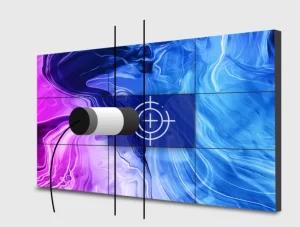
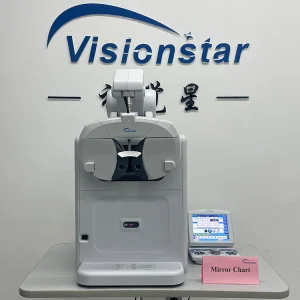
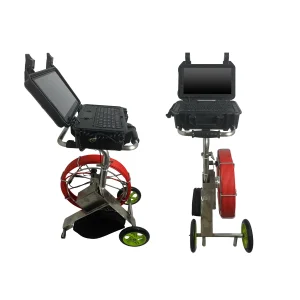
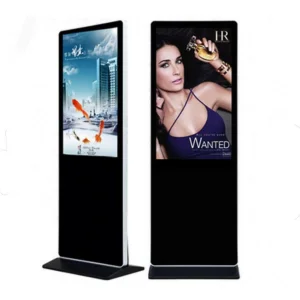
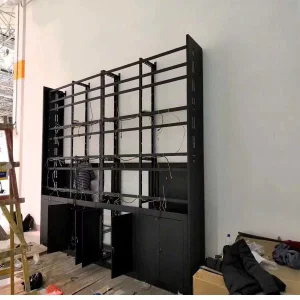
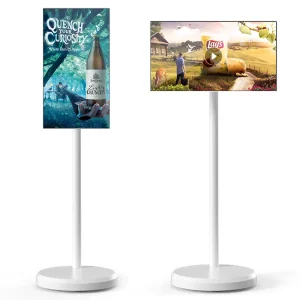
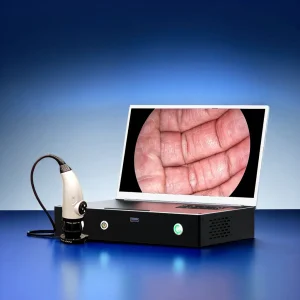
Engineered for integration into advanced control centers, specialized transport fleets, and clinical diagnostic setups across the Canberra region.
Canberra, as Australia's political and administrative heartland, is experiencing a quiet technological revolution. Unlike heavy manufacturing cities, the Australian Capital Territory (ACT) requires high-end, secure, and energy-efficient displays. These screens support government command centers, defence projects in Fyshwick and Mitchell, national research institutes like CSIRO, and advanced clinical hubs such as Canberra Hospital.
In these critical environments, the backbone of visual precision is the LED Backlight Unit (BLU). From rugged optical instrumentation panels to ultra-high-definition, low-latency control screens, local OEM system integrators require backlighting technology that meets stringent standards for clarity, longevity, and thermal management. The shift toward digital transformation across national security infrastructures, smart city frameworks, and digital traffic monitoring centers has generated significant demand for custom optical solutions. Local systems must perform reliably under continuous 24/7 operating cycles.
High-security operations demand displays with precise electromagnetic interference (EMI) shielding. These require customized LED backlight architectures that operate at optimized voltage and thermal profiles to prevent signal leakage.
Diagnostic displays in radiology and optometry clinics require strict luminance uniformity. They need backlighting that meets DICOM compliance standards and offers stable color temperature control over thousands of operational hours.
The display industry is transitioning from legacy CCFL and edge-lit structures to complex multi-zone, direct-lit, and Mini-LED technologies. In Canberra’s professional environments, where optical accuracy is crucial, understanding this engineering roadmap helps procurement managers specify components that minimize obsolescence.
Modern LED Backlight Units utilize advanced light distribution layers, incorporating premium Light Guide Plates (LGP), diffuser sheets, and Prism Sheets (BEF). These direct flux outputs perpendicularly toward the LCD matrix. Our latest engineering roadmap focuses on three main developments:
Mini-LED technology uses thousands of microscopic emitter chips grouped into thousands of local dimming zones. This structure achieves high contrast ratios (1,000,000:1) and reduces the "halo effect," which is vital for dark-background visualization in security operations.
By adding a nanocrystal layer between the blue LED backlight source and the LCD display panels, we expand the NTSC color gamut coverage up to 110%. This enables accurate color rendering for graphic design and geographical mapping agencies.
Furthermore, managing heat dissipation remains a primary challenge for high-power backlights. Modern architectures use aluminum-core Printed Circuit Boards (MCPCBs) paired with high thermal-conductivity resins. These materials quickly transfer heat away from the LED junctions, keeping operating temperatures under 65°C to prevent color shift and premature luminous decay.
Customized backlighting architectures designed for specific commercial, aerospace, and medical system requirements.
In command facilities, video walls and surveillance displays operate continuously. Backlight solutions must feature integrated PWM dimming circuits to allow precise brightness adjustment from 10 nits to over 1000 nits. This range helps reduce operator fatigue during night shifts while remaining legible under bright ambient lighting.
Medical displays depend on precise backlight control systems to keep light levels consistent as the light source ages. These circuits monitor and adjust output levels automatically, helping clinics in the ACT comply with diagnostic display safety regulations.
Canberra's climate requires outdoor displays that remain readable in direct sunlight. High-brightness LED backlights, combined with specialized anti-glare films, deliver over 2,500 nits of light output. These units include automated temperature protection to prevent thermal damage.
Energy-efficient backlight panels help commercial centers reduce their carbon footprints. Utilizing high-lumen-per-watt SMD LED components allows operators to cut power use by up to 35% compared to older display designs.
Importing electronic assemblies into Australia requires navigating complex national regulatory frameworks. At the federal level, all devices must comply with the Regulatory Compliance Mark (RCM) requirements. This mark confirms compliance with safety standards (such as AS/NZS 62368.1 for audio, video, and information technology equipment) and electromagnetic compatibility (EMC) testing.
Additionally, the ACT is actively working to reduce carbon emissions. Commercial display systems used in government projects must meet strict efficiency standards under the Greenhouse and Energy Minimum Standards (GEMS) Act. Our custom LED Backlight Units use high-efficacy LED dies that generate more lumens per watt, helping systems comply with Australian eco-design regulations.
We work closely with local engineering partners and testing laboratories to supply fully certified sub-assemblies. This collaboration helps simplify the final certification process for Australian equipment manufacturer (OEM) clients.
Zhongshan Zever Light Co., Ltd., established in 2005, is a professional LED manufacturer located in Zhongshan, China—one of the country’s key lighting industry hubs.
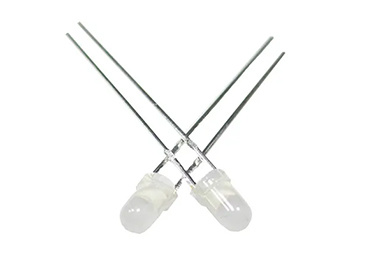
We specialize in the research, development, production, and sales of a wide range of LED products. Our main product lines include THT LEDs, SMD/Chip LEDs, LED displays, infrared LEDs, dot matrix modules, LCD backlights, and various LED lighting fixtures for commercial and residential applications.
Our facility covers approximately 6,000 square meters and is equipped with 8 production lines, supported by a skilled workforce of over 800 employees. All raw materials we use comply with RoHS directives and are sourced from reliable suppliers in Taiwan, the United States, Japan, and South Korea to guarantee superior performance and environmental safety.
At Zever Light, we place strong emphasis on innovation and customization. Our dedicated R&D team, consisting of 16 experienced engineers with an average of more than 5 years in the LED industry, is capable of meeting both standard and highly customized requirements. We welcome customers’ ideas and designs and are committed to turning them into high-quality, market-ready products.
Our factory operates under strict quality management systems and has been certified with ISO9001 and ISO14001 standards. With advanced automatic production equipment and modern manufacturing technology, we ensure high efficiency and consistent product quality.
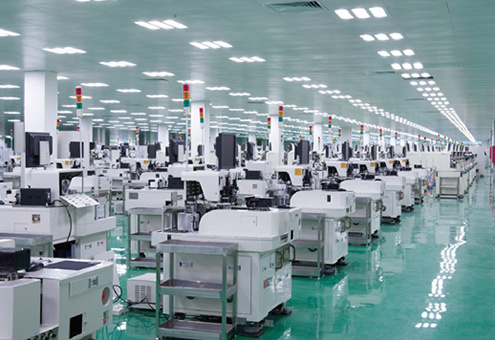
Our management system is supported by an advanced ERP platform, ensuring efficient operations and on-time delivery. Our quality control team conducts strict inspections at every stage—from incoming materials to production and final shipment—to ensure that every product meets international standards. We pride ourselves on fast delivery times, with urgent orders fulfilled in as little as 1–2 weeks. Our commitment to reliability, quality, and customer satisfaction has earned us the trust of clients worldwide. Quality is our culture. Working with us means your investment is secure and your business is supported by a dependable partner.
For procurement directors managing modern supply networks, selecting an LED backlight manufacturer involves evaluating total cost of ownership (TCO) alongside technical specifications. Relying on lower-tier suppliers can lead to issues like color shift, inconsistent brightness, or premature failure, resulting in costly repair and replacement cycles.
Zever Light optimizes this procurement equation through two primary methods:
We source key materials directly from reliable suppliers in the US, Japan, South Korea, and Taiwan. This ensures that every LED chip, silicon adhesive, and leadframe meets high stability requirements, minimizing failures in the field.
Our facilities utilize customized ERP systems to monitor every phase of manufacturing, from receiving raw materials to final QC. This allows us to track component batches reliably and trace issues if problems occur.
Explore our technical range, featuring specialized displays and diagnostic testing components engineered for reliability.
Answers to critical engineering and procurement questions regarding LED Backlight Units.
Edge-Lit backlights mount LEDs along the edges of the display frame and use a Light Guide Plate (LGP) to distribute light across the screen. This allows for thinner panel profiles. Direct-Lit backlights place the LED array directly behind the LCD panel, which permits thicker, high-brightness structures with local dimming zones for higher contrast.
Mini-LED backlights utilize dense arrays of smaller LEDs, enabling high-precision localized control. This high-density setup allows the display to reach peak luminance levels above 1500–2000 nits, which helps maintain visibility and clarity even in direct sunlight.
Imported components and finished systems must meet Safety and EMC standards to qualify for the Regulatory Compliance Mark (RCM). These typically include testing under AS/NZS 62368.1. Products should also align with GEMS energy efficiency guidelines and comply with RoHS restriction of hazardous substances directives.
We color-bin our LED chips within precise MacAdam Ellipse steps and use automated optical inspection equipment to measure luminance uniformity. These steps help prevent color variations, ensuring consistent performance from batch to batch.
Yes. Our engineering division designs custom LED PCBs, specifies customized light guide shapes, and integrates driving circuit components to meet the requirements of clinical, medical, and specialized industrial monitors.
 Zever Light